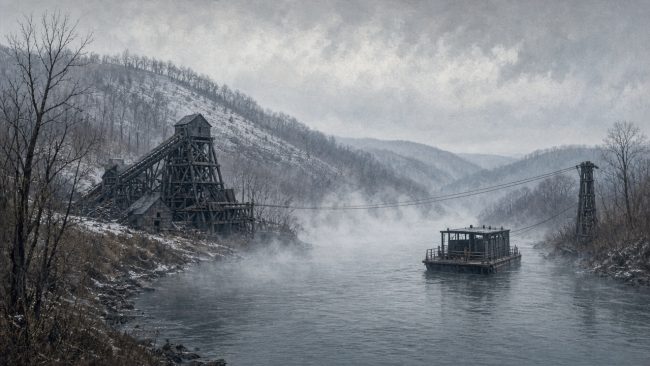
The Darr Mine Disaster of 1907: Pennsylvania’s Deadliest Coal Mine Explosion
The Darr Mine disaster of December 19, 1907 killed 239 men and boys near Van Meter. Here is what caused it, how many died, what the reports said, and what remains.


How Pittsburgh became an industrial powerhouse, told through its mills, furnaces, factories, inventors and workers.
The Darr Mine disaster of December 19, 1907 killed 239 men and boys near Van Meter. Here is what caused it, how many died, what the reports said, and what remains.
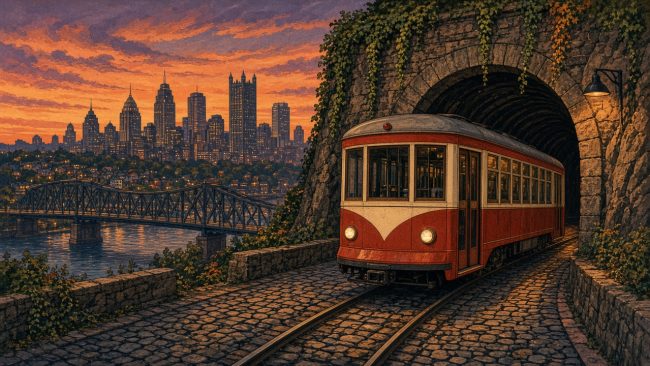
At its peak Pittsburgh ran streetcars on 606 miles of track and 99 routes. Here is how it fell to 58 miles by 1967, the 1917 tunnel disaster that scarred it, and why the South Hills lines survived.
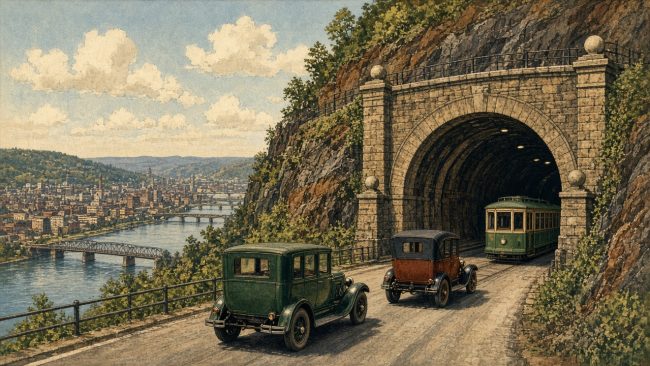
The Liberty Tunnel was built between 1919 and 1922 and opened to traffic on January 30, 1924, before its ventilation was ready. Here is the timeline, the 1924 scare, and the city’s other road tunnels.
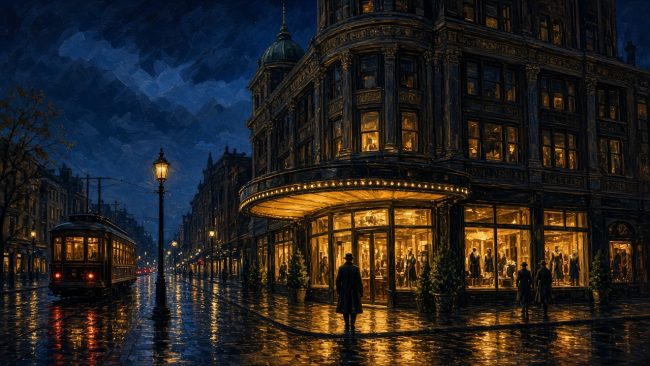
Gimbels Pittsburgh shut its doors on September 13, 1986. The reasons were a parent company that wanted out, steep losses, a labor fight, and the shift to the suburbs.

The night of November 2, 1920, was cold and clear in Pittsburgh, and somewhere on the roof of a Westinghouse factory in East Pittsburgh, a small group of men huddled around a transmitter inside a makeshift wooden shack and did something that had never been done before. They broadcast a radio program to the general…

Hard Times on the Iron Rails In the mid-1870s, life for American railroad workers was harsh. The country was mired in a severe economic depression following the Panic of 1873, often called the Long Depression. Businesses were failing by the thousands, unemployment was high, and those who still had jobs saw their wages dropping. The…

When it comes to Pittsburgh comfort food, few aromas evoke nostalgia like the warm, yeasty scent wafting from a fresh loaf of Mancini’s bread. For nearly a century, Mancini’s Bakery has been more than just a purveyor of bread – it’s a beloved institution and a family legacy woven into the fabric of the Steel…

Inside the Homestead Strike of 1892: Labor’s Bloody Stand In the summer of 1892, the steel town of Homestead, Pennsylvania, erupted into one of the most violent labor conflicts in American history. On July 6, roughly 300 armed Pinkerton agents tried to land from river barges at Andrew Carnegie’s Homestead Works. Thousands of locked-out steelworkers…

Nestled along the Monongahela River just southeast of Pittsburgh lie the remnants of once-mighty steel towns: Braddock, Homestead, Duquesne, McKeesport, and Clairton. These towns weren’t just dots on the map—they were vital arteries in the industrial heart of America. They forged the steel that built bridges, skyscrapers, and warships. But today, echoes of molten furnaces…

Introduction: The Steel City Goes to War In the early 1940s, as World War II engulfed the globe, Pittsburgh, Pennsylvania, stood as a beacon of industrial strength. Known as the “Steel City,” Pittsburgh was already a manufacturing giant, but the war elevated its role to new heights. The city became the “Arsenal of the Allegheny,”…