

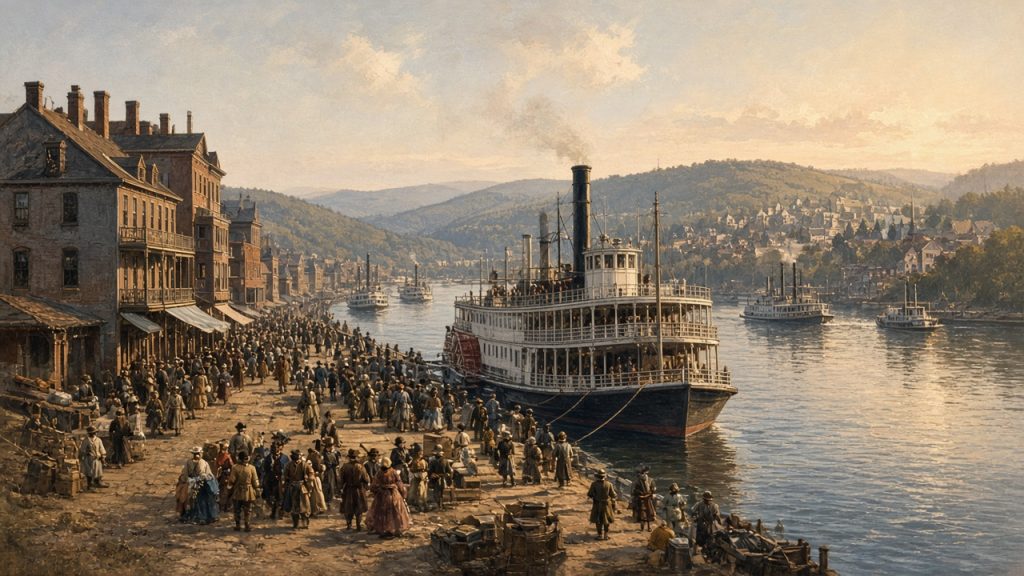
The Underground Railroad in Pittsburgh: Documented Sites, Real Cases and Myths
Pittsburgh’s Underground Railroad was built by its Black community. Here are the 1850 exodus, three fugitive slave trials, the confirmed sites, and why the tunnel stories remain unproven.
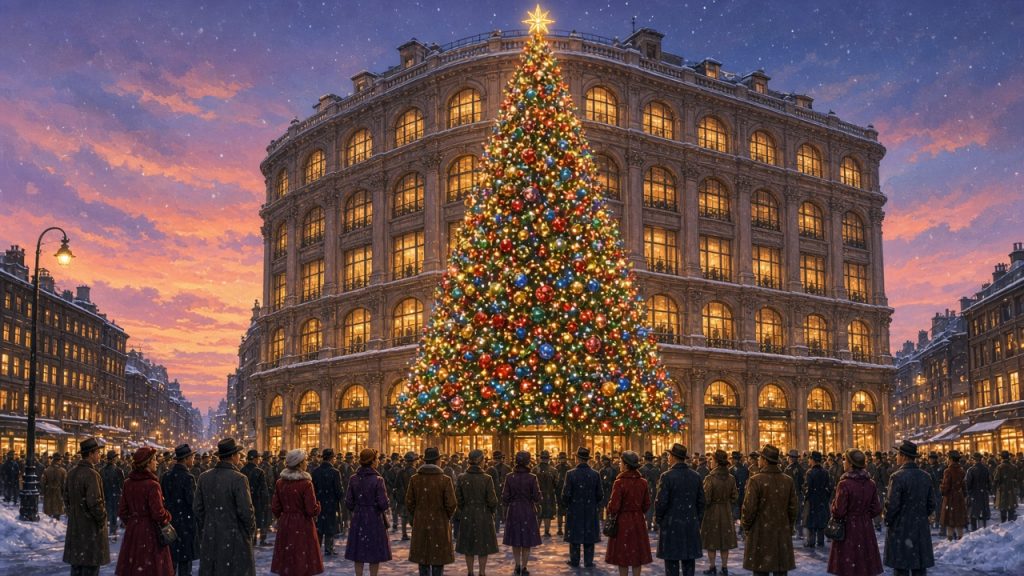
The Horne’s Christmas Tree: How a Pittsburgh Tradition Outlived Its Store
The Horne’s Christmas tree began in 1953 as a string of lights for sick children. Here is how it survived energy crises, a store sale and a fireproof building that burned.
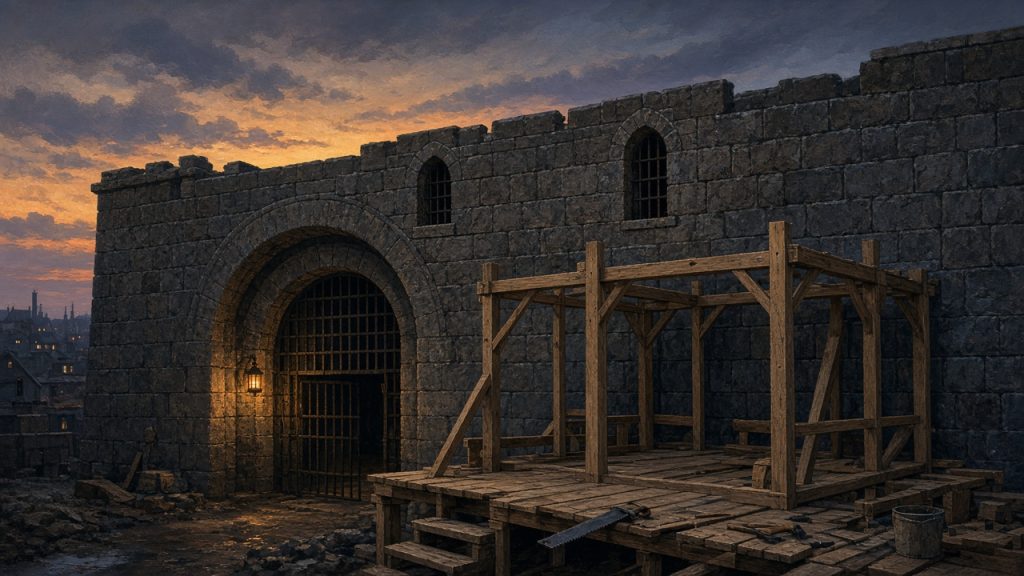
Hangings at the Old Allegheny County Jail: What the Record Shows
Allegheny County jail hangings ended in 1911. Here are the documented cases, how the gallows worked, why Pennsylvania chose the electric chair in 1913, and which ghost stories have sources.
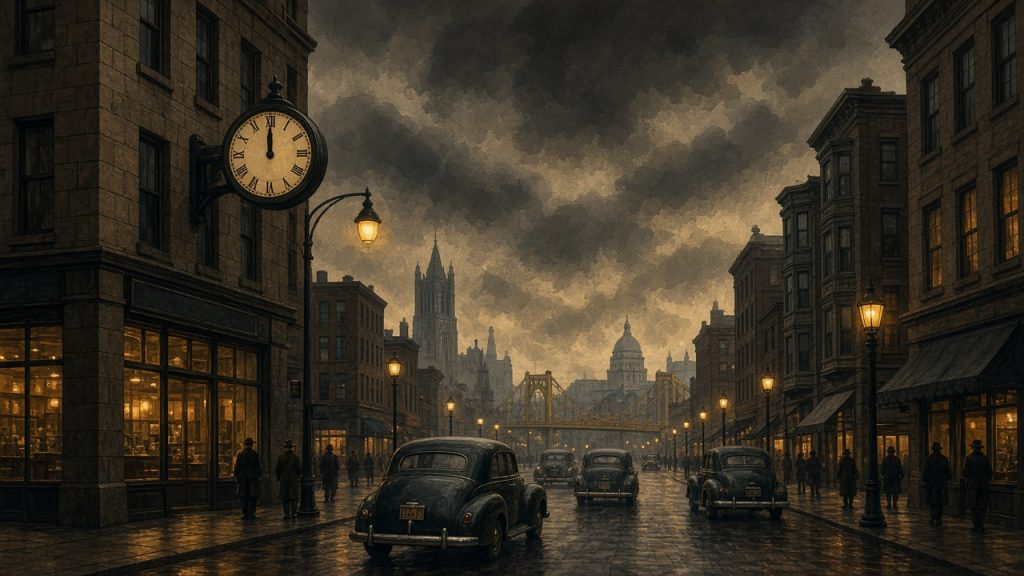
Pittsburgh Before Smoke Control: The Smoky City Where Streetlights Burned at Noon
Before Pittsburgh smoke control, soot blackened curtains and midday skies. How the 1941 ordinance, Mayor David Lawrence and Richard King Mellon finally cleared the air, and what residents remembered.
The Allegheny Arsenal Explosion of 1862: Pittsburgh’s Forgotten Civil War Disaster
On September 17, 1862, the same day as Antietam, an explosion at Lawrenceville’s Allegheny Arsenal killed 78 workers, mostly young women and girls. Here is what the records show, what is disputed, and what remains.
Pittsburgh Streetcars: How a 606-Mile Network Disappeared (and Which Lines Survived)
At its peak Pittsburgh ran streetcars on 606 miles of track and 99 routes. Here is how it fell to 58 miles by 1967, the 1917 tunnel disaster that scarred it, and why the South Hills lines survived.
Who Skinned Henry Southerland? A Documented Case of Pennsylvania Body Snatching, 1857
In 1857 a boy found a skinned body in a Brookville icehouse. A doctor who helped dig it up later told the full story, and went on to help write the 1883 law that sent bodies to Pittsburgh’s medical schools.
When Was the Liberty Tunnel Built? The Story Behind Pittsburgh’s Road Tunnels
The Liberty Tunnel was built between 1919 and 1922 and opened to traffic on January 30, 1924, before its ventilation was ready. Here is the timeline, the 1924 scare, and the city’s other road tunnels.
Why Gimbels Closed in Pittsburgh: The Last Days of a Downtown Department Store
Gimbels Pittsburgh shut its doors on September 13, 1986. The reasons were a parent company that wanted out, steep losses, a labor fight, and the shift to the suburbs.

The Kecksburg UFO: What Really Fell in Westmoreland County in 1965?
A fireball crossed six states on December 9, 1965, and a search party combed the Westmoreland County woods. Here is what the record shows, what grew up later, and what is still disputed.
Meet Me Under the Kaufmann’s Clock: The Store Behind Pittsburgh’s Favorite Landmark
Pittsburgh’s favorite meeting spot grew out of a South Side tailor shop. Here is how the Kaufmann’s clock got its corner, and what became of the Big Store behind it.
The Pittsburgh Neighborhood Demolished to Build the Civic Arena
Before the Civic Arena’s roof opened to the skyline in 1961, about 95 acres of the Lower Hill District were cleared. Here is what stood there, who left, and what the records can and can’t prove.

Squirrel Hill Pittsburgh: History of a Beloved Neighborhood
Squirrel Hill Pittsburgh sits on the eastern edge of the city where the land rises above Schenley Park and the great university campuses of Oakland, a neighborhood of tree-lined streets, brick rowhouses, and a commercial district on Murray and Forbes avenues that locals call “upstreet.” It is the traditional center of Pittsburgh’s Jewish community, and…

Mary Lou Williams: Pittsburgh’s Queen of Jazz
Mary Lou Williams Pittsburgh origins begin with a child sitting at a piano in East Liberty who could play anything she heard before she was old enough to read music. She was born Mary Elfrieda Scruggs in Atlanta, Georgia, on May 8, 1910, but her family moved to Pittsburgh around 1915, when she was a…

Billy Strayhorn: Pittsburgh’s Hidden Jazz Genius
Billy Strayhorn Pittsburgh origins are the beginning of one of the most remarkable stories in the history of American music, and almost nobody outside of jazz circles knows it. The song “Take the A Train” is one of the most recognizable pieces of music the twentieth century produced. It served for decades as the signature…

Martin Delany: Pittsburgh’s Father of Black Nationalism
Martin Delany Pittsburgh history begins with a remarkable fact that most people, including most Pittsburghers, have never heard. In February 1865, President Abraham Lincoln personally commissioned Martin Delany as a Major in the Union Army, making him the first Black field officer in the history of the United States. The two men met in early…

The Pittsburgh Crawfords: Baseball’s Greatest Lost Team
The Pittsburgh Crawfords of the early 1930s were, by most informed assessments, one of the greatest baseball teams ever assembled. Their roster in the mid-1930s included five players who would eventually be inducted into the Baseball Hall of Fame. Their pitcher was Satchel Paige, among the most dominant and theatrical hurlers of his era. Their…

Josh Gibson Pittsburgh: The Greatest Hitter Who Never Got His Shot
Josh Gibson Pittsburgh career ended on January 20, 1947, when he died of a stroke at the age of thirty-five. He had been in declining health for some time, his body worn down by years of catching, by a brain tumor, by the specific grief of a man who understood what was being withheld from…

Chipped Ham Pittsburgh: The Isaly’s Story Behind the Icon
Isaly’s Pittsburgh: Chipped Ham, Klondike Bars & a Lost Legacy Chipped ham Pittsburgh style is one of those foods that is almost impossible to explain to someone who did not grow up with it. Order it at a deli counter anywhere outside western Pennsylvania and watch what happens. The person behind the counter will look…

Freedom House Ambulance: Pittsburgh’s Forgotten EMS Pioneers
Somewhere in Pittsburgh’s Hill District in the late 1960s, a young man with no medical background beyond a demanding training course was doing things in the back of a moving ambulance that were then almost unheard of outside a hospital: managing airways, starting IV lines, monitoring cardiac rhythms and defibrillating. The Freedom House Ambulance Service,…

Three Rivers Stadium: Pittsburgh’s Lost Cathedral of Sport
On the morning of February 11, 2001, thousands of Pittsburgh residents gathered on bridges, riverbanks, and rooftops in the cold to watch a building die. Three Rivers Stadium Pittsburgh had stood at the confluence of the Allegheny and Monongahela rivers for thirty years, and at 8:03 a.m. a series of precisely placed explosive charges brought…

The 1979 Pittsburgh Pirates: We Are Family
The 1979 Pittsburgh Pirates arrived at the World Series trailing in a way that should have ended their season. Down three games to one against the Baltimore Orioles, facing elimination on the road, managed by a man whose mother had died that very morning, the Pirates did something that only a handful of teams in…

The William Penn Hotel: Pittsburgh’s Grand Hotel Legacy
There is a moment, stepping through the front doors of the William Penn Hotel Pittsburgh and into the lobby, when the city outside seems to fall away. The ornate plasterwork overhead, the grand chandeliers throwing warm light across the polished floors, the sense of accumulated occasion that clings to a room where generations of deals…

Pittsburgh Penguins History: From Bankruptcy to Dynasty
In the entire history of professional sports, it is difficult to find a franchise whose story moves more dramatically from the edge of oblivion to the top of the world than the Pittsburgh Penguins. Pittsburgh Penguins history is not a straightforward rise-to-greatness narrative. It is something stranger and more interesting than that: a fifty-year chronicle…

Andy Warhol’s Pittsburgh: The City That Made an Icon
The image most people carry of Andy Warhol is a specific one: silver wig, dark sunglasses, dry wit, surrounded by beautiful people in a Manhattan loft called the Factory, holding a camera and speaking in careful monosyllables about soup cans and celebrity. It is an image Warhol himself constructed with great deliberateness, and it is…

KDKA Radio History: How Pittsburgh Invented Broadcasting
The night of November 2, 1920, was cold and clear in Pittsburgh, and somewhere on the roof of a Westinghouse factory in East Pittsburgh, a small group of men huddled around a transmitter inside a makeshift wooden shack and did something that had never been done before. They broadcast a radio program to the general…

The Steel Curtain: Pittsburgh Steelers 1970s Dynasty
The Pittsburgh Steelers 1970s dynasty is the standard against which every other run of sustained excellence in professional football is measured. Four Super Bowl championships in six seasons. A defense so suffocating it earned a nickname that referenced both the city’s industrial identity and the most foreboding geopolitical barrier of the Cold War era. A…

Pittsburgh Inclines History: Duquesne & Monongahela
On a clear evening, if you stand at the base of the Duquesne Incline on West Carson Street and watch one of its vintage wooden cars creak slowly up the face of Mount Washington, it is easy to forget that you are looking at a piece of living Pittsburgh inclines history. The car climbs at…

Pittsburgh Hosted the 1948 NFL Draft Before. Here’s What That Looked Like.
When the NFL rolled into Pittsburgh for the 2026 Draft on April 23rd, the city looked like a football carnival. The North Shore packed. Point State Park lit up. Acrisure Stadium as the backdrop for a broadcast seen by millions. The NFL reported 805,000 fans over the three days, a draft attendance record. It felt…

Pittsburgh’s Oldest Commercial Building Is a Sandstone Tavern on Greentree Road. Here’s Its Story.
Sometime around 1782 — possibly earlier — a trader named Daniel Elliott built a sandstone tavern along the road connecting Washington and Pittsburgh, and travelers heading into the frontier started stopping there for a drink, a meal, and a place to sleep. That building is still standing. It sits at 434 Greentree Road, two stories…

The Oldest House in Pittsburgh Is a Scottish Pub in Hazelwood. Here’s Its Story.
Around 1792, when Pittsburgh was barely a city and the surrounding region was still very much a frontier, the Woods family built a stone house overlooking the Monongahela River in what is now Hazelwood. That house is still standing. It is a two-and-a-half-story vernacular rubblestone house with hand-hewn beams, wide-plank floors, and fireplaces at each…

Park House Tavern Has Been on the North Side Since Before Prohibition. It’s Still Worth Finding.
At 403 East Ohio Street on Pittsburgh’s North Side, there is a two-story brick building that has been part of the neighborhood since the 1890s. Its ground floor held shops over the years, including at least one saloon, and during Prohibition a bakery and candy store. After repeal it became, according to the bar, one…

The Original Oyster House Has Been Standing in Market Square Since 1870. Here’s Its Story.
There is a building on Market Square that has been serving food and drinks since Ulysses S. Grant was president. Not a building that looks old. Not a place that leans on vintage aesthetics as a marketing strategy. An actual bar and restaurant that has been continuously operating in the same spot in downtown Pittsburgh…

The 1927 Armored Car Bombing “Dante’s Inferno”
The Day Someone Blew Up a Payroll Convoy Near Pittsburgh On Bethel Road (now Brightwood Road) in what is now Bethel Park, in the South Hills, on the morning of March 11, 1927, the ground exploded. Not metaphorically. Not as a figure of speech. Someone had buried hundreds of pounds of black powder beneath the…

Kate Soffel: Pittsburgh’s Most Scandalous Prison Break
If you lived in Pittsburgh in January 1902, you couldn’t escape the story. Kate Soffel—wife of the Allegheny County Jail’s warden—helped the condemned Biddle Brothers escape and fled with them into the winter night. The scandal shocked Pittsburgh and became one of the most notorious crimes in the city’s history. Who Was Kate Soffel? Kate…

Blue Mist Road: The Irwin Murders and Pennsylvania’s Most Haunted Highway
The Real Blue Mist Road – A Secluded North Park Byway Blue Mist Road is not a name you’ll find on an official map, but locals in Allegheny County know it well. The road’s real name is Irwin Road, a narrow lane tucked deep into North Park, just north of Pittsburgh. By day, it’s a…

Cookies, Community, and Tradition: The Story of Pittsburgh’s Wedding Cookie Table
Imagine you’re attending a wedding in Pittsburgh. The bride and groom are swaying through their first dance, the band is playing a familiar tune, and guests are clinking glasses. In the corner of the reception hall, however, another star of the show awaits: a cookie table overflowing with homemade treats. Tiered platters display hundreds of…

The Great Railroad Strike of 1877: When the Nation’s Rails Stopped in Their Tracks
Hard Times on the Iron Rails In the mid-1870s, life for American railroad workers was harsh. The country was mired in a severe economic depression following the Panic of 1873, often called the Long Depression. Businesses were failing by the thousands, unemployment was high, and those who still had jobs saw their wages dropping. The…

Bloomfield’s Little Italy Days: A Celebration of Italian Heritage
Italian Roots in Bloomfield (Early 1900s) Bloomfield, a neighborhood just three miles east of downtown Pittsburgh, earned the nickname “Pittsburgh’s Little Italy” thanks to a wave of Italian immigration in the early 20th century. While the area was initially settled by German Catholic immigrants (who built St. Joseph’s Church in 1886), Italians from villages in…

The Beacon Hotel: A Century of Spirits, Stories, and Haunted History
A Roadside Beacon in Butler County’s History In the rolling hills of Butler County, along the old north-south corridor of Route 8, stands the Beacon Hotel – a tavern and roadhouse that has watched a century of local history unfold. The Krelow family arrived on a Butler County farm in 1929, and the Hotel Beacon…

Fort Pitt Block House: Pittsburgh’s Oldest Building
Frontier Fort at the Forks of the Ohio In the mid-18th century, three mighty rivers meet at a point of land in what is now downtown Pittsburgh. This strategic “Forks of the Ohio” was the prize in a global conflict between empires – the French and Indian War (1754–1763). After wresting control from the French…

The Soul of Pittsburgh’s Hill District
Pittsburgh Hill District history lives on every corner of this neighborhood – in the echoes of jazz that once poured from basement clubs, in the memories of civil rights battles, and in the resilient spirit of its people. Nestled just above Downtown Pittsburgh’s “Golden Triangle,” the Hill District rose to prominence in the early 20th…

The Lost Amusement Parks of Pittsburgh
In the early 20th century, America’s love affair with the amusement park was at its peak – by 1919, there were between 1,500 and 2,000 amusement parks operating across the United States . Pittsburgh was no exception. In fact, Pennsylvania was once home to nearly 150 amusement parks that eventually closed , and the Pittsburgh…

The Witches of Harmony
Introduction: Frontier Faith and Fear In the early 19th century, the dense woods of Western Pennsylvania held more than just wild game and frontier homesteads. They held secrets and stories. The tiny village of Harmony, PA—founded by a band of mystic German settlers—was a place where utopian dreams met old-world superstitions. Long before ghost tours…

Famous Heists and Crimes in Pittsburgh History
Introduction: A City of Steel and Shadowy Schemes Pittsburgh’s image has long been defined by its steel mills, smoky skies, and hardworking communities. Yet behind the forge and furnaces lurks a parallel history of audacious heists, gritty gangsters, and headline-grabbing crimes. From the mud-caked streets of the 1800s frontier town to the bustling industrial metropolis…

The History of Troy Hill
High atop a narrow plateau on Pittsburgh’s North Side, the neighborhood of Troy Hill has watched over the city’s rivers and industries for nearly two centuries. In the mid-1800s, one might have stood on this hill and heard the sounds of church bells mingling with the din of mills below, or even the squeals of…

The Rise of Mancini’s Bread: A Pittsburgh Baking Legacy
When it comes to Pittsburgh comfort food, few aromas evoke nostalgia like the warm, yeasty scent wafting from a fresh loaf of Mancini’s bread. For nearly a century, Mancini’s Bakery has been more than just a purveyor of bread – it’s a beloved institution and a family legacy woven into the fabric of the Steel…

Inside the Homestead Strike of 1892: Labor’s Bloody Stand
Inside the Homestead Strike of 1892: Labor’s Bloody Stand In the summer of 1892, the steel town of Homestead, Pennsylvania, erupted into one of the most violent labor conflicts in American history. On July 6, roughly 300 armed Pinkerton agents tried to land from river barges at Andrew Carnegie’s Homestead Works. Thousands of locked-out steelworkers…

Forgotten Steel Towns: Braddock, Homestead, and the Decline of the Mon Valley
Nestled along the Monongahela River just southeast of Pittsburgh lie the remnants of once-mighty steel towns: Braddock, Homestead, Duquesne, McKeesport, and Clairton. These towns weren’t just dots on the map—they were vital arteries in the industrial heart of America. They forged the steel that built bridges, skyscrapers, and warships. But today, echoes of molten furnaces…

Mobsters of Pittsburgh: The LaRocca Era and the Rise of Organized Crime
Mobsters of Pittsburgh: The LaRocca Era and the Rise of Organized Crime In the smoke-filled back rooms of Pittsburgh’s working-class neighborhoods, amid the clinking glasses and whispered deals of its social clubs, a quiet but ruthless empire was born. Pittsburgh’s mafia history often sits in the shadow of more famous cities like New York and…

Charlie No Face The Real Raymond Robinson Story
Charlie No Face was Raymond Robinson, a real man from western Pennsylvania who survived a childhood electrical accident. His nighttime walks inspired the Green Man legend. On a moonless summer night in western Pennsylvania decades ago, a group of teenagers parks on the side of a lonely country road. They kill the engine and nervously…

Pittsburgh’s Role in World War II: Arsenal of the Allegheny
Introduction: The Steel City Goes to War In the early 1940s, as World War II engulfed the globe, Pittsburgh, Pennsylvania, stood as a beacon of industrial strength. Known as the “Steel City,” Pittsburgh was already a manufacturing giant, but the war elevated its role to new heights. The city became the “Arsenal of the Allegheny,”…

The Hill District Before Jazz: Immigrant Roots and Early Development
By the mid-1800s, Pittsburgh’s Hill District was already alive with a cacophony of languages and cultures. Long before the neighborhood earned its nickname as “Little Harlem” for its jazz heyday, the Hill was a true melting pot of immigrants and migrants forging a community atop the city’s eastern hills. Its story in the 19th and…

The 1936 St. Patrick’s Day Flood That Drowned Downtown Pittsburgh
Pittsburgh has always been a river town. The Allegheny, the Monongahela, and the Ohio aren’t just pretty landmarks or navigational quirks — they shaped everything about the city, from its steel empire to its street grid. But as any seasoned Yinzer will tell you, those rivers aren’t always friendly. Sometimes, they rise up and remind…

Pittsburgh’s Role in Prohibition: Moonshine, Speakeasies, and Bootleggers
On a warm summer evening in 1919, throngs of Pittsburghers packed into saloons for what was billed as the “last call” before the dry law took effect. Strangely, the wild debauch many expected never materialized. “Everybody came to see everybody else get drunk,” the Pittsburgh Post observed the next day, “and nobody got drunk”. Little…

The Haunted History of the Old Allegheny Jail and Western Penitentiary
Pittsburgh’s historic prisons are more than stone and steel – they’re storied landmarks where history and legend intertwine. Tales of daring escapes, infamous inmates, and restless spirits have long swirled around the Old Allegheny County Jail and the Western Penitentiary, two formidable institutions that once loomed over the Steel City’s justice system. In this journey…

Mobster Hideouts You Can Still Visit in Pittsburgh’s Strip District
Pittsburgh’s vibrant Strip District is beloved for its eclectic markets, trendy eateries, and bustling streets. However, beneath its colorful surface lies a fascinating, shadowy past marked by bootlegging, organized crime, and legendary mobsters. This intriguing underworld history dates back to Prohibition (1920–1933), a time when the federal ban on alcohol inadvertently fostered a thriving black…

11 Historic Storms That Shook Pittsburgh
Pittsburghers have seen it all when it comes to wild weather. Living at the confluence of three rivers and in the path of both northern blizzards and southern storm systems means the Steel City’s history is peppered with epic floods, legendary blizzards, howling winds, and even the occasional tornado. In true Pittsburgh fashion, each storm…

Fort Ligonier Days: The History Behind the Festival
Each October, the quiet town of Ligonier, Pennsylvania, bursts into life with Fort Ligonier Days — a three-day celebration of colonial heritage, regional pride, and the town’s pivotal role in American history. What began in 1958 as a modest local event has grown into one of the premier fall festivals in Pennsylvania, drawing tens of…

Steel City Saga: How the Steel Industry Shaped Pittsburgh
Pittsburgh’s transformation from a modest frontier settlement into the pulsating heart of America’s industrial revolution is nothing short of a saga. This is a story of innovation, struggle, conflict, and resilience—a chronicle of how the steel industry not only built skyscrapers and railroads, but also sculpted the very soul of the Steel City. In this…

The Untold Story of the Great Fire of 1845: How Pittsburgh Rose from the Ashes
On April 10, 1845, a seemingly ordinary day in Pittsburgh turned catastrophic when a single spark ignited a fire that would level about a third of the burgeoning city. Known as the Great Fire of 1845, this inferno burned for nearly seven hours, destroyed more than a thousand buildings and displaced roughly 12,000 people. It…

From Fort Duquesne to Tech Hub: A Timeline of Pittsburgh’s History
Pittsburgh’s story is a vivid tapestry woven with conflict, innovation, industry, and transformation. From its earliest days as a French military outpost to its current status as a global leader in robotics and AI, Pittsburgh has constantly evolved with the times—shaped by geography, fueled by industry, and driven by people. Here’s a deep dive into…

Primanti Brothers: The Rise, the Sandwich, and Its Fading Role in Pittsburgh’s Food Scene
Explore the rise and cultural shift of Primanti Brothers — from feeding Pittsburgh’s workers to becoming a nostalgic symbol of the city’s industrial past.

The Thunderbird Legend: Pittsburgh’s Mysterious Encounter with a Giant Bird
Explore the eerie legend of Pittsburgh’s Thunderbird — a mysterious giant bird sighted over the city in 1944. Fact, folklore, or something more?

Bridges of Legacy: The Story Behind Pittsburgh’s Iconic Overpasses
Discover the story behind Pittsburgh’s legendary bridges — from steel marvels to cultural icons. Explore the history, engineering, and enduring legacy of the City of Bridges.

The Rise and Fall of Pittsburgh’s Iron Furnaces: Foundations of an Industrial Empire
Discover the forgotten history of Pittsburgh’s iron furnaces — the industrial giants that laid the foundation for the Steel City and built America’s industrial might.

The Steel Valley Story: How Pittsburgh’s Monongahela River Towns Forged America
Explore the powerful story of Pittsburgh’s Steel Valley — the Monongahela River towns that built America’s industrial might and shaped labor history.

Andrew Carnegie: The Man Who Built Pittsburgh and Gave It Away
Explore the incredible life of Andrew Carnegie — the immigrant who built Pittsburgh’s steel empire, became the richest man in America, and gave it all away.

Henry Heinz: How a Pittsburgh Entrepreneur Changed the World with Ketchup
Discover the incredible story of Henry Heinz — the Pittsburgh pioneer who turned ketchup into a global icon and revolutionized food safety, marketing, and American industry.

August Wilson: Telling Pittsburgh’s Black Story to the World
Explore the life and legacy of August Wilson, the Pulitzer-winning playwright who brought Pittsburgh’s Hill District and the Black American experience to the global stage.

The Biddle Boys: Pittsburgh’s Most Notorious Outlaws
Discover the true story of the Biddle Boys — Pittsburgh’s most notorious outlaws, their daring jailbreak, and the love affair that shocked a city.

George Westinghouse: The Forgotten Genius Who Lit America
Discover the life of George Westinghouse — the brilliant Pittsburgh inventor and industrialist who revolutionized electricity, railroads, and worker rights, but remains history’s forgotten genius.

John Bazzano: Pittsburgh’s Ruthless Mafia Don
John Bazzano was, for less than a year, the leading figure in Pittsburgh’s Prohibition-era rackets, and he is remembered for the most notorious gangland killing in the city’s history and for his own murder two weeks later. His story is often told with a strongman’s swagger, but the best documented account, the Pittsburgh Post-Gazette’s long-form…

The Johnstown Flood of 1889: Pennsylvania’s Great Disaster
On May 31, 1889, a wall of water surged down the Conemaugh Valley in Pennsylvania, wiping entire communities off the map in what remains one of the deadliest disasters in American history. The Johnstown Flood, as it came to be known, was more than just a tragedy—it was a watershed moment that revealed the dangers…

The Life of Henry Clay Frick: Pittsburgh’s Most Controversial Tycoon
Explore the life of Henry Clay Frick — Pittsburgh’s most controversial industrialist whose empire shaped the city and left a legacy of wealth, art, and infamy.

Martha Graham: Pittsburgh’s Dance Pioneer Who Shaped Modern Dance
Explore the life and legacy of Martha Graham, the Pittsburgh-born pioneer who revolutionized modern dance and left an enduring impact on American culture.

Roberto Clemente: How a Pirates Star Became Pittsburgh’s Greatest Hero
Explore the inspiring life and legacy of Roberto Clemente — Pittsburgh Pirates legend, humanitarian, and cultural icon who transcended baseball.

Fred Rogers and the Neighborhood Legacy He Left Behind
Discover how Fred Rogers and “Mister Rogers’ Neighborhood,” filmed in Pittsburgh, left behind a powerful legacy of empathy, kindness, and emotional education that still resonates today.

Haunted Allegheny Cemetery: The History, Legends, and Hauntings of Pittsburgh’s Oldest Burial Ground
Explore the haunted history of Pittsburgh’s Allegheny Cemetery in Lawrenceville. Discover true stories, notable burials, and the ghost legends that make it the city’s most haunted burial ground.

Art Rooney and the Founding of the Pittsburgh Steelers: Building a Football Dynasty from the Ground Up
Explore the inspiring story of Art Rooney and the founding of the Pittsburgh Steelers — from humble beginnings to building one of the NFL’s most iconic dynasties.
The Untold Stories of Pittsburgh’s Early Black Entrepreneurs
Explore the untold stories of Pittsburgh’s early Black entrepreneurs — from barbers and livery owners to media pioneers — and their lasting impact on the city’s history.

Pittsburgh’s Role in the Birth of the Aluminum Industry: The Alcoa Story
Discover how Pittsburgh and Alcoa pioneered the aluminum industry, transforming global manufacturing, aviation, and daily life. Explore the city’s role as the Aluminum Capital.

The Legacy of Westinghouse: Powering the World from Pittsburgh
Explore the legacy of Westinghouse in Pittsburgh — from powering the world with AC electricity to revolutionizing railroads and nuclear energy. Discover how Westinghouse shaped a city and the globe.

How the Glass Industry Made Pittsburgh the “Glass City”
Discover how Pittsburgh became America’s “Glass City.” Explore the rise, impact, and legacy of Pittsburgh’s historic glass industry and its global influence.

Pittsburgh’s Coal Mining Boom: Fueling an Industrial Nation
Explore Pittsburgh’s coal mining boom and how it fueled America’s industrial rise. Discover the towns, labor struggles, and environmental legacy of the region’s coal era.

Pittsburgh’s Role in the Oil Boom of the 19th Century
Discover Pittsburgh’s forgotten role in America’s 19th-century oil boom. Learn how the city’s refineries, rivers, and industries fueled the rise of the global oil economy.

Pittsburghese and Beyond: 25 Words and Phrases Unique to Pittsburgh
The Language of the Steel City “Yinz goin’ dahntahn to watch dem Stillers?” is the sentence Pittsburghers use to explain Pittsburghese to outsiders, and it packs in most of what makes the dialect distinctive: a plural “you” generally traced to Scots-Irish settlers, a vowel that turns “down” into “dahn,” and an accent that makes “Steelers”…

Steel Titans and Silent Stacks: The Technologies That Built (and Broke) Pittsburgh’s Steel Empire
Introduction: Innovation and Obsolescence in the Steel City Pittsburgh’s steel dominance wasn’t just built on raw resources — it was driven by relentless technological innovation. From the Bessemer process that launched an empire to the outdated open-hearth furnaces that spelled its collapse, Pittsburgh’s rise and fall as America’s steel capital is a story of industrial evolution and…

The History of the Gateway Clipper Fleet: Pittsburgh’s Floating Landmark
When people think of Pittsburgh’s rivers today, they picture the Gateway Clipper Fleet — a collection of elegant riverboats cruising the city’s iconic waterways. For more than 60 years, the Clipper has been more than just a sightseeing cruise — it’s a floating piece of Pittsburgh history, carrying generations of locals and visitors through the city’s industrial past and vibrant present.

The Story of Pittsburgh’s Riverboats and the Shipping Industry
Introduction: Pittsburgh’s Rivers — Highways of Industry Before railroads crisscrossed the land or highways tied America together, Pittsburgh’s three rivers — the Allegheny, Monongahela, and Ohio — served as vital arteries of commerce, transportation, and industry. Riverboats and barges turned the city into a bustling inland port, fueling its rise as the “Gateway to the West” and…

The History of the Pittsburgh Railroads and Union Station
Introduction: The Steel City on the Rails Pittsburgh’s rise as an industrial giant was impossible without its railroads. In the 19th and early 20th centuries, railroads fueled the city’s steel empire, moved millions of passengers and connected Pittsburgh to the rest of the country. At the heart of it all stood Pittsburgh’s Union Station, a…

The Mellon Family Banking Dynasty: From Pittsburgh to Wall Street
Introduction: How One Pittsburgh Family Shaped American Finance The Mellon family name is synonymous with Pittsburgh’s rise as a financial and industrial powerhouse. What began as a modest banking operation in 19th-century Pittsburgh evolved into one of the most influential family dynasties in American history. The Mellons didn’t just fund Pittsburgh’s steel mills and glass…

Famous Movies Filmed in Pittsburgh (With Exact Locations You Can Visit)
Introduction: Hollywood’s Favorite Steel City Backdrop Pittsburgh has played itself, Gotham City and Memphis in films from Night of the Living Dead to The Dark Knight Rises. Pennsylvania’s film tax credit, which the Pittsburgh Film Office promotes, and a local crew base have kept productions coming. By 2012 the Film Office’s director was telling Entertainment…

Kennywood: Pittsburgh’s Working-Class Wonderland Turned Landmark
A Trolley Park for the Working Class (1898) On a spring day in 1898, crowded trolleys clattered out of downtown Pittsburgh carrying steel mill workers and their families toward a green hilltop above the Monongahela River. Their destination was Kennywood Park, a brand-new “trolley park” created as a weekend escape from the city’s smoke and…

The Churches That Built Pittsburgh: A Look at the City’s Oldest and Most Beautiful Cathedrals
The Spiritual Backbone of Pittsburgh’s History Pittsburgh’s most beautiful churches rise above the city’s steel and glass skyline, their Gothic spires and grand cathedrals telling stories that span centuries. These historic churches in Pittsburgh showcase stunning architectural masterpieces—from soaring stone cathedrals with intricate stained glass to hidden chapels housing sacred relics. Each represents the faith,…

Pittsburgh’s Oldest Bars and the History Behind Them
Pittsburgh is a city built on tradition, and nothing embodies its history quite like its oldest bars. Long before craft beer and cocktail lounges took over, these watering holes served as gathering places for steelworkers, bootleggers, and politicians alike. Some have survived Prohibition, economic downturns, and shifting drinking trends, yet they remain standing as testaments to Pittsburgh’s resilience. Let’s take a look at the oldest bars in the Steel City and the rich history behind them.

Unveiling Ohiopyle, PA: A Thrilling Journey Through Pennsylvania’s Hidden History
Introduction Ohiopyle history begins in a small borough in Fayette County, Pennsylvania, southeast of Pittsburgh, where nature and the past intertwine. This guide traces the town’s journey from its Native American origins through George Washington’s frontier expeditions, the Whiskey Rebellion, the lumber and railroad boom and the resort era to its present status as a…

Fallingwater: The Story Behind Frank Lloyd Wright’s Architectural Masterpiece
Fallingwater isn’t just a house—it’s a living, breathing piece of art. Designed by the legendary Frank Lloyd Wright, this Pennsylvania icon is built directly over a waterfall, seamlessly blending architecture with nature. Completed in 1938, it remains one of the most famous homes in the world, attracting architecture lovers, history buffs, and curious travelers alike.

Prehistoric Pittsburgh: From Meadowcroft to Monongahela
Before Pittsburgh’s towering steel mills and bustling riverfronts, the land where the Allegheny and Monongahela Rivers meet to form the Ohio River was home to humans for thousands of years. The first known evidence of human habitation in the region comes from Meadowcroft Rockshelter, located about 30 miles southwest of modern Pittsburgh. This remarkable archaeological site has provided some of the oldest evidence of human activity in North America, dating back to around 16,000 BCE.

The History of the Laurel Highlands Hiking Trail: From Vision to Reality
The Laurel Highlands Hiking Trail (LHHT) stands as one of Pennsylvania’s premier long-distance trails, offering hikers an immersive experience through the breathtaking scenery of the Laurel Highlands region. Stretching 70 milesfrom Ohiopyle State Park to the Conemaugh Gorge, this trail is a cherished gem for outdoor enthusiasts. But how did this scenic route come to be? The history of the LHHT is…

The Transformation of the Strip District Over the Years
The Strip District is one of Pittsburgh’s most dynamic neighborhoods, a place where the past and present collide in an ever-evolving urban landscape. Once a bustling industrial hub, it has transformed into a vibrant destination for food, culture, and innovation. From steel mills and produce warehouses to tech startups and boutique shops, the Strip District’s story is one of reinvention and resilience.

Pittsburgh’s Notorious Gangsters and Crime Stories: A Journey Through the Underworld
Pittsburgh’s underworld has a rich and turbulent history, from the wild days of Prohibition-era bootleggers to the iron grip of mid-century Mafia bosses, and from infamous outlaws who terrorized the region to modern high-stakes heists and corruption scandals. Each era left its mark on the Steel City’s lore and shaped law enforcement responses in lasting ways. What follows is a historical journey through Pittsburgh’s most notorious gangsters and crime sagas – an engaging narrative of speakeasy shootouts, Mafia meetings, bank robberies, and headline-grabbing crimes that have become part of local legend.

How Oakland Became Pittsburgh’s Education & Medical Hub
Oakland is often called the intellectual heart of Pittsburgh, home to world-renowned universities, cutting-edge hospitals, and cultural institutions. But it wasn’t always this way. Once a quiet, residential neighborhood on the outskirts of the city, Oakland transformed over the past century into a center of higher learning, medical innovation, and research. From its early days to its modern prominence, here’s how Oakland became Pittsburgh’s education and medical hub.

The Legendary Steelworker Bars of Pittsburgh
Before the breweries and gastropubs of today, Pittsburgh’s drinking culture was forged in the smoke and fire of the steel mills. For decades, steelworkers spent grueling hours in blistering heat, shaping molten metal into the backbone of America’s industrial empire. And when the shift ended, they headed straight to their neighborhood bars—places where they could shake off the grime, share stories, and unwind with an Iron City Beer in hand.

The Most Iconic Murals and Street Art in Pittsburgh
Pittsburgh is a city built on steel and innovation, but its walls tell a story far beyond industry. In recent decades, Pittsburgh’s streets, bridges, and buildings have become a canvas for breathtaking murals and street art, transforming the city into an open-air gallery. From towering tributes to local legends to vibrant displays of cultural pride, these murals are more than just paint on brick—they are windows into the heart and soul of the Steel City. Here’s a look at some of the most iconic murals and street art that define Pittsburgh’s artistic landscape.

The Iron City Beer Story: A Brewing Legacy
Pittsburgh’s blue-collar roots run deep, and so does its beer. Long before craft breweries dotted the city’s landscape, one name stood above the rest: Iron City Beer. Brewed for over 160 years, this iconic Pittsburgh lager has been a staple in bars, ballparks, and steel mills alike. It is more than just a beer—it is a symbol of the city’s grit, perseverance, and unwavering loyalty.

The Story of Polish Hill: A Hidden Gem of Pittsburgh
Nestled between the Allegheny River and the bustling neighborhoods of Bloomfield and Lawrenceville, Polish Hill stands as one of Pittsburgh’s most storied and culturally rich communities. It is a neighborhood built on the backs of hardworking Polish immigrants, whose dreams of a better life forged an enduring legacy. While often overshadowed by larger districts, Polish Hill has played a crucial role in shaping Pittsburgh’s identity, blending tradition with resilience in a way few other places have.

The Evolution of Pittsburgh’s Skyline
The Smokestack Era: Steel Mills Dominate the Horizon In the 19th and early 20th centuries, Pittsburgh’s skyline was not a cluster of tall buildings, but a forest of smokestacks. The city’s booming steel mills and factories lined its riverbanks, belching out so much smoke that midday skies often turned dark as night . Soot blanketed…

Why Did Pittsburgh’s Steel Industry Collapse?
Why did Pittsburgh’s steel industry collapse? The short answer: between 1980 and 1987 the Pittsburgh region’s steel workforce fell from about 84,500 to about 27,700, as imports, new technology and a deep recession exposed mills that had been built for a different century. The longer answer starts in 1875, when one rail mill on the…

The Rise and Fall of Allegheny City
The Rise and Fall of Allegheny City Pittsburgh’s North Side wasn’t always part of Pittsburgh. Once upon a time, it was its own thriving, independent city—Allegheny City—a place with grand ambitions, a strong economy, and a deep sense of local pride. But in 1907, after decades of growth, political wrangling, and fierce opposition, Allegheny City…

The Greatest Steelers Players of All Time
Few franchises in NFL history boast a legacy as rich and decorated as the Pittsburgh Steelers. From their gritty beginnings in 1933 to their six Super Bowl championships, the Steelers have built a dynasty on toughness, consistency, and an unbreakable blue-collar work ethic that mirrors the city they call home.