
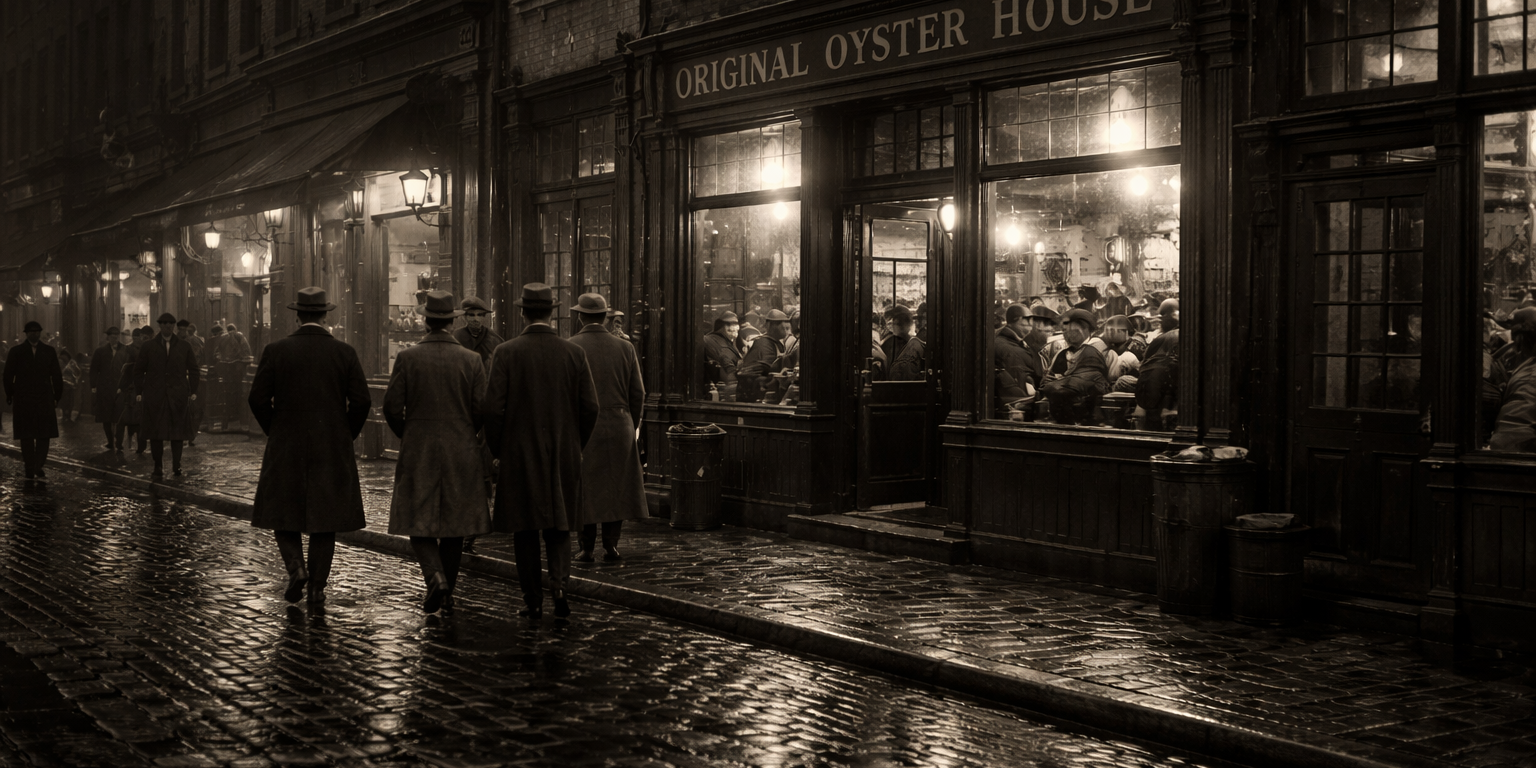
There is a building on Market Square that has been serving food and drinks since Ulysses S. Grant was president.
Not a building that looks old. Not a place that leans on vintage aesthetics as a marketing strategy. An actual bar and restaurant that has been continuously operating in the same spot in downtown Pittsburgh since 1870, through the Gilded Age, two World Wars, Prohibition, the steel collapse, a pandemic, and everything in between.
It’s called the Original Oyster House, and if you’ve spent any time in Pittsburgh, you’ve probably walked past it without fully registering what you were looking at.
You should register it.
How It Started
In the years right after the Civil War, a man named Mickey McGulic opened a seafood tavern on Market Square and called it the Original Oyster House.
The timing was right. Market Square was the commercial heart of Pittsburgh — merchants, workers, city politicians, and tradespeople all moving through the same crowded blocks. Oysters in that era weren’t a luxury item. They were affordable, portable, and everywhere, which is why a place that could serve them fast and cheap made sense in a neighborhood full of people who wanted a quick meal and a drink.
The prices reflect the era in a way that feels almost fictional today. Oysters for a penny. Beer for a dime. That was the proposition, and apparently Pittsburgh was interested, because the place survived.
Then kept surviving.
What Surviving Actually Looked Like
It’s easy to say a place has been open since 1870 and leave it at that. It sounds like a clean, pleasant fact. What it actually means is that the Original Oyster House made it through things that closed almost everything else.
The industrial transformation of Pittsburgh. The fires and floods that reshaped the city repeatedly in the late 1800s. Prohibition, which arrived in 1920 and made serving alcohol illegal for thirteen years. The Depression. World War II. The collapse of the steel industry that gutted Pittsburgh’s economy in the 1980s. Rising rents, corporate development, and the relentless pressure on small independent businesses in every decade since.
During Prohibition, the Oyster House reinvented itself as a straight seafood restaurant — and if local accounts are to be believed, kept a speakeasy running in a back room. That wasn’t unusual for Pittsburgh. Pittsburgh’s role in Prohibition is a long and colorful story, and the Oyster House appears to have played its part. When Prohibition ended in 1933, the bar license came back and so did the pints.
After that it became the kind of place that ends up in stories. Steelworkers and civic leaders at the same bar. Post-game crowds from baseball and hockey. Film stars and journalists passing through. The kind of room where people from different corners of the city ended up next to each other because the food was good and the location was central and nobody was pretending to be somewhere fancier than they were.
The Building Itself
The Original Oyster House occupies a narrow two-story brick building on Market Square that has changed remarkably little since the 1870s.
Walk in and you’ll find dark wooden paneling, a long pewter bar, pressed-tin ceilings, old photographs on the walls, and wooden booths worn smooth by generations of people sitting in them. The Pittsburgh History & Landmarks Foundation designated the building a historic landmark in 1970, the same year the restaurant turned 100 and the city threw a street party to mark the occasion.
Standing at that bar, surrounded by skyscrapers visible through the tall front windows, is a specific Pittsburgh experience. The scale of the room is completely out of step with everything built around it in the last fifty years, and that contrast is the point. It survived because people kept choosing to preserve it rather than replace it.
When the restaurant’s fifth proprietor, Louis Grippo, took over, he made that commitment explicit — preserving the architecture, maintaining the character, and resisting the kind of updates that would have turned the Oyster House into something unrecognizable.
The current owners have continued that stance, including holding the line on location during periods when redevelopment pressure around Market Square was significant. The argument is simple: the Original Oyster House belongs in Market Square, and Market Square is better for having it.
What It Is Today
The menu hasn’t wandered far from its origins. Fried fish sandwiches. Crab cakes. Oysters. The kind of straightforward seafood that built the place’s reputation and the kind that keeps people coming back.
The location still makes it a natural stop. Market Square sits close enough to PNC Park, Heinz Hall, and the Cultural District that pre-game and pre-show crowds have been filing through for decades. The bar’s proximity to PPG Paints Arena adds another stream of foot traffic on game nights.
But the people who love the Original Oyster House don’t usually talk about it in terms of convenience. They talk about it the way Pittsburghers talk about things that feel genuinely theirs — with a mix of pride and protectiveness that doesn’t require much explaining if you’re from here.
Visit Pittsburgh calls it the city’s oldest bar and restaurant — and if you want to see how it stacks up against the rest of the city’s historic drinking establishments, Pittsburgh’s oldest bars and the history behind them is worth your time. But the title undersells the Oyster House a little.
It’s not just old. It’s still good. And in a city with as much layered history as Pittsburgh, finding a place where both of those things are true at the same time is rarer than it sounds.
Visitor Information
Address: 20 Market Square, Pittsburgh, PA 15222
Hours: Monday–Saturday 11am–10pm, Sunday Noon–9pm (check their website for current hours as these can vary)
Website: originaloysterhousepittsburgh.com
Dine-in and takeout available
The Original Oyster House has been operating at 20 Market Square since 1870. The building was designated a historic landmark by the Pittsburgh History & Landmarks Foundation in 1970.