
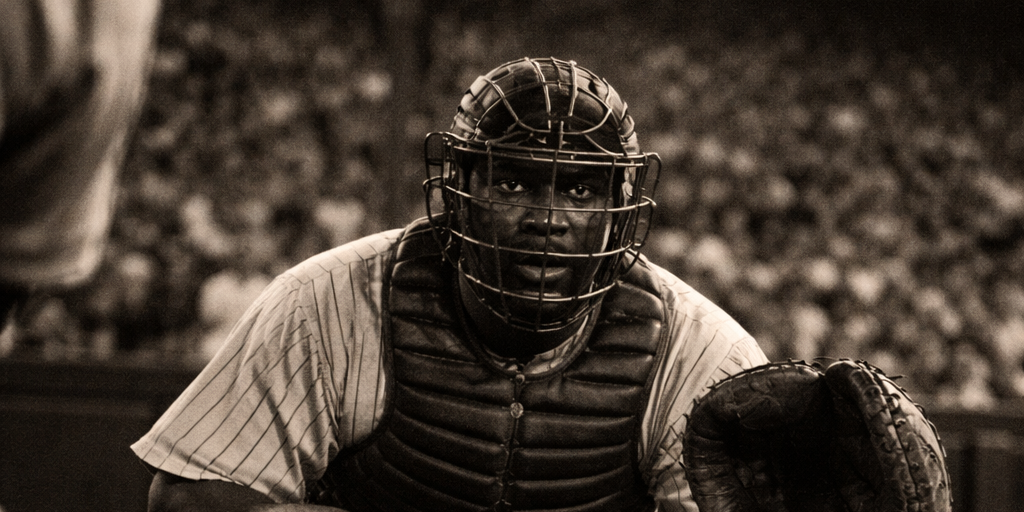
Josh Gibson Pittsburgh career ended on January 20, 1947, when he died of a stroke at the age of thirty-five. He had been in declining health for some time, his body worn down by years of catching, by a brain tumor, by the specific grief of a man who understood what was being withheld from him and could not stop understanding it. Three months after his death, Jackie Robinson took the field for the Brooklyn Dodgers and broke the color barrier that had kept Gibson out of the Major Leagues for his entire career. The timing is one of the more brutal coincidences in American sports history. The man many considered the greatest hitter the game had ever produced died ninety days before he might have finally gotten to prove it against the best competition in the world.
What Josh Gibson accomplished in the Negro Leagues, against the best Black players of his era and in the barnstorming games against white Major Leaguers that happened outside the official record books, is staggering by any measure. What was taken from him by segregation is incalculable. Both things are true simultaneously, and Pittsburgh, the city where he came of age and where he died, is where that full story belongs.
From Georgia to Pittsburgh
Josh Gibson was born on December 21, 1911, in Buena Vista, Georgia. His father Mark Gibson was a sharecropper who made the decision, common to thousands of Black southern families during the Great Migration, to move north in search of industrial work and a life less constrained by the specific brutalities of the Jim Crow South. The Gibson family settled in Pittsburgh, where Mark found work in the steel mills, joining the enormous wave of Black workers whose labor powered the furnaces that made Pittsburgh the industrial capital of the country.
Josh Gibson grew up in Pittsburgh, attending school and developing the athletic gifts that made him immediately noticeable. He was a physically large young man with extraordinary hand-eye coordination and the kind of raw power that baseball people recognize immediately as categorically different from ordinary strength. He played amateur baseball in Pittsburgh’s sandlot leagues through his teenage years, catching for various teams in the Black amateur circuit that operated throughout the city.
It was in this context, playing amateur ball in Pittsburgh, that Gibson’s story intersected with the professional game in a way that was more legend than routine. The account that has been told and retold since his death holds that Gibson was in the stands at a Homestead Grays game in 1930 when the Grays’ catcher was injured and could not continue. Someone connected to the team noticed Gibson in the crowd, knew his reputation from the amateur leagues, and asked if he could catch. Gibson took the equipment, went behind the plate, and performed well enough that the Grays offered him a professional contract on the spot.
The story may have the edges that all good stories acquire over generations of retelling. What is not disputed is that Josh Gibson joined the Homestead Grays in 1930, at the age of eighteen, and that within a very short time it was apparent that something unusual had arrived.
What He Could Do
The problem with assessing Josh Gibson’s career statistically is that Negro League record-keeping was inconsistent and incomplete, a consequence of operating on smaller budgets with less institutional infrastructure than the white Major Leagues. The numbers that exist suggest a career batting average in the neighborhood of .359, an extraordinary figure for any era, combined with home run totals that various researchers have estimated at somewhere between 800 and 1,000 or more over his career. The exact figures are contested. The direction they point is not.
The home run stories that accumulated around Gibson during his career have the quality of folklore, but they are folklore grounded in the testimony of people who were there. He reportedly hit a ball in a game at Yankee Stadium that traveled so far it was described by witnesses as the only fair ball ever hit out of that park. He reportedly hit home runs of distances that the dead-ball era Yankees would have found implausible and that modern players with modern equipment would be proud of. In one season, by some accounts, he hit 84 home runs.
The appropriate response to these numbers is neither uncritical acceptance nor reflexive skepticism. They come from a context in which official verification was often impossible, but they also come from witnesses who had no particular incentive to exaggerate and every incentive to be accurate about what they saw. What the stories collectively establish, supported by the statistics that do exist, is that Josh Gibson hit a baseball harder and farther than almost anyone who has ever played the game. The people who saw him play and who also saw Babe Ruth play consistently said that comparing the two was a reasonable exercise and that the outcome of that comparison was not obvious.
The Pittsburgh Crawfords
In the early 1930s, Gibson played for the Pittsburgh Crawfords, the Hill District team owned by Gus Greenlee that assembled what many consider the greatest Negro League roster in history. The Crawfords of that era had Gibson catching and Satchel Paige pitching, a battery that in terms of individual talent had no parallel in the Negro Leagues and arguably no parallel in baseball anywhere. The two players were both, by contemporary accounts and by the statistical evidence available, playing at a level that would have made them stars in the Major Leagues if the Major Leagues had been open to them.
Greenlee built Greenlee Field, the first Black-owned professional baseball stadium in the country, in the Hill District specifically to give the Crawfords a proper home. The stadium and the team it housed were expressions of what the Hill District was during its peak years: a self-sufficient Black community that had built its own institutions because the mainstream ones were closed to it, and that had built them well enough to produce something genuinely extraordinary.
Gibson and Paige together gave the Crawfords a daily advertisement for what Black players could do. The East-West All-Star Game, the Negro Leagues’ showcase event held annually in Chicago, drew tens of thousands of fans and demonstrated year after year that the talent playing in the segregated leagues was not a lesser version of Major League talent but a parallel version of equal quality.
The Homestead Grays Dynasty
Gibson returned to the Homestead Grays and became the anchor of a team that dominated the Negro National League through the late 1930s and into the 1940s. The Grays, based in Homestead but playing home games at Forbes Field in Pittsburgh when the Pirates were on the road, won nine consecutive Negro National League pennants between 1937 and 1945. Gibson was their catcher and their most feared hitter throughout that run.
The Grays drew large crowds to Forbes Field, including many white Pittsburgh fans who came to see Gibson hit. This was not an unusual situation. Gibson’s reputation had crossed the color line in the specific way that exceptional talent occasionally does, compelling acknowledgment even from people operating within a system designed to suppress it. Major League players who barnstormed against Negro League teams in the offseason came back with consistent reports: Gibson was as good as anyone they had faced, and probably better than most.
Walter Johnson, one of the greatest pitchers in Major League history, saw Gibson play and offered an assessment that has been quoted ever since: that Gibson was a catcher any big league club would love to have. The compliment was genuine and the implication was clear. The reason no big league club had Gibson had nothing to do with his ability.
The Question That Could Not Be Asked Officially
Throughout Gibson’s career, the comparison to Babe Ruth was inescapable and unanswerable. Ruth was the standard by which hitting was measured. Gibson was hitting at a level that the people watching believed matched or exceeded that standard. But the official record books of Organized Baseball contained no Josh Gibson statistics, because Josh Gibson had never been allowed to play in Organized Baseball. The comparison existed entirely in testimony and memory, which is a different kind of evidence than a box score but not necessarily a less reliable one.
Bill Veeck, the innovative baseball executive who attempted multiple times to sign Negro League players before Jackie Robinson’s integration, considered Gibson among the greatest players he had ever seen. The consensus among people who watched both Gibson and Ruth was that calling Gibson “the Black Babe Ruth” was, if anything, understating Gibson’s ability and underselling his individuality as a player. Some argued the nickname should have run the other direction.
None of this resolved the question officially, because the question could not be resolved officially within the system that existed during Gibson’s playing years. The answer that was available, the answer that his performance in the Negro Leagues and in barnstorming games provided, pointed consistently in one direction. Josh Gibson was one of the greatest players who ever lived. The system ensured that the full proof of that would never be assembled.
The Decline
By the mid-1940s, Gibson’s health was deteriorating. He had suffered from a brain tumor. His behavior became erratic at times in ways that people around him recognized as signs of serious illness. The physical toll of catching, one of the most demanding positions in baseball, compounded the neurological problems. He continued to play and continued to hit, because hitting was what he did and he could not stop doing it even as everything else declined, but the end was approaching.
There was also, according to people who knew him, a psychological weight that is not reducible to physical illness alone. Gibson knew that integration was coming. He had heard the discussions, followed the politics, understood that the barrier was weakening. He was thirty-five years old. Whether he would be young enough and healthy enough to play in the Major Leagues when they finally opened was increasingly uncertain. The proximity of something he had wanted his entire career and the growing likelihood that it would arrive too late for him specifically was its own form of suffering.
He died on January 20, 1947. The reported cause was a stroke. He was thirty-five years old and had been playing professional baseball for seventeen years. He left behind a record of achievement that the official books of the sport did not contain.
Ninety Days
Jackie Robinson played his first game for the Brooklyn Dodgers on April 15, 1947. Josh Gibson had been dead for eighty-five days.
The proximity is the thing that stops people when they first do the math. Eighty-five days. Ninety days. The color barrier that had defined Gibson’s entire career and foreclosed the official recognition he deserved fell within the same calendar year that he died. Whether Gibson would have been healthy enough to play in the Major Leagues by 1947 is genuinely uncertain. Whether he deserved the chance is not uncertain at all.
The Hall of Fame That Came Too Late
In 1972, twenty-five years after his death, Josh Gibson was inducted into the Baseball Hall of Fame in Cooperstown, New York. He was part of the first class of Negro League players to receive the honor, a long-overdue acknowledgment that the official history of the game had been written with a significant omission. The plaque in Cooperstown describes him as the greatest slugger in Negro League history. People who saw him play would have used a shorter description: one of the greatest sluggers in the history of baseball, full stop.
A statue of Josh Gibson stands today outside Nationals Park in Washington, D.C., where the Homestead Grays played some home games during his career. Pittsburgh, the city where he grew up and where he died, carries his legacy in the history of the Hill District community that produced the Crawfords and in the broader story of what Black Pittsburgh accomplished during the decades when official America was doing its best to pretend that accomplishment did not exist.
Josh Gibson hit more home runs than Babe Ruth, by most accounts. He batted for a higher average. He played his entire career against competition that was, by the available evidence, comparable to what the Major Leagues offered. He did all of this without ever being given the opportunity to do it on the stage the sport reserved for its best players. He died three months before that stage opened.
Pittsburgh produced him. The game failed him. Both of those facts belong in the same sentence.