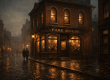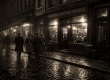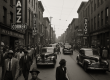

On a Tuesday afternoon in 1925, a federal Prohibition agent walking down Smallman Street would have seen nothing unusual. Produce vendors hawking vegetables. Freight trucks rumbling over cobblestones. Warehouse workers loading and unloading cargo along the Allegheny River.
Then the agent would have noticed the door.
Unmarked. Reinforced. A small sliding panel at eye level. A knock, a password, a pause — and then the sound of jazz music and clinking glasses rising up from somewhere below the street.
Pittsburgh was the wettest city in America during Prohibition, and the Strip District was a big reason why.
The City That Refused to Go Dry
When the Volstead Act took effect in 1920, it ran headlong into a city that had absolutely no intention of complying.
Pittsburgh was a city of steelworkers, immigrants, and laborers for whom a beer after a twelve-hour shift wasn’t a luxury — it was the point. German, Italian, Irish, and Eastern European communities had built drinking traditions into the fabric of neighborhood life, and no federal amendment was going to change that overnight.
National observers took notice almost immediately. Within a few years of Prohibition’s start, Pittsburgh was being called “the wettest spot in the United States” — a distinction the city seemed to wear with quiet pride. Downtown alone had what locals called “Rum Row” on Penn Avenue, where eight speakeasies operated on a single block. The grand William Penn Hotel ran a secret bar in its basement. Mayor Charles Kline ran an elaborate protection racket, collecting payoffs from bootleggers to ensure their operations stayed open.
For a full picture of how Pittsburgh navigated those thirteen years, Pittsburgh’s role in Prohibition covers the city-wide story. But the Strip District was where the machinery of defiance was most concentrated and most creative.
Why the Strip Was Perfect for Bootleggers
The Strip District’s geography was almost purpose-built for smuggling.
A narrow ribbon of land hemmed in by the Allegheny River on one side and a ridge on the other, the Strip funneled goods in and out of the city through a dense concentration of railroad spurs, river docks, warehouses, and freight infrastructure. By day it was one of the busiest commercial corridors in Pittsburgh — produce markets, meat wholesalers, cold storage facilities, delivery operations running around the clock.
That legitimate daytime commerce was the perfect cover for an illicit nighttime economy.
Illegal whiskey could arrive by boat down the Allegheny. Moonshine from Appalachian stills came in by rail or truck, tucked alongside legitimate cargo. Warehouses that spent their days storing beef and produce spent their nights storing contraband. The building now occupied by Wholey’s Market at 1711 Penn Avenue — originally built in 1928 as the Federal Cold Storage warehouse — reportedly had its refrigerated rooms used by Pittsburgh mobsters to stash imported whiskey behind walls of hanging beef and seafood, where federal agents were unlikely to look too carefully.
The neighborhood’s working-class immigrant communities added another layer of cover. Italian families making wine in the basement. Irish social clubs pouring drinks after hours. A dusty grocery with a back-room bar that materialized after midnight. A bakery cellar where the smell of rye bread helpfully masked the smell of rye whiskey.
What the Speakeasies Actually Looked Like
The speakeasies of the Strip ranged from barely-furnished to surprisingly elaborate.
At the basic end: a cramped basement room, a homemade bar, moonshine or near-beer spiked with grain alcohol, and whatever light a bare bulb could throw. At the other end: gramophones playing hot jazz, makeshift dance floors, a room designed to feel like a real nightclub — which, for many patrons, it was.
What they all shared was secrecy and ingenuity.
No signs. No visible entrance from the street. Access through an alley or loading bay, down a few steps, through a reinforced door with a peephole slider. A password, a familiar face, or a nod from the right person. Once inside, the atmosphere could be surprisingly warm — longshoremen still in work clothes clinking glasses with city councilmen, mill workers and college students sharing a table, the usual social boundaries dissolved in the dim light of a basement bar that everyone technically wasn’t supposed to be in.
The Strip’s speakeasies developed elaborate defenses against raids. False fronts — a café or ice cream parlor by day that slid open a partition to reveal a bar at night. Alarm systems wired to doors up and down the block, so a raid on one establishment warned the others. Escape routes through connected basements. Decoy entrances designed to lead agents into an empty storeroom while the actual party cleared out elsewhere.
In one famous downtown example, the William Penn Hotel’s speakeasy had a concealed hallway running along the foundation that allowed guests to slip out to Oliver Avenue if police appeared. The Strip District’s operations ran similar playbooks.
The Bootleg Tunnels
This is the part of the story that became legend, and the legend turns out to be largely true.
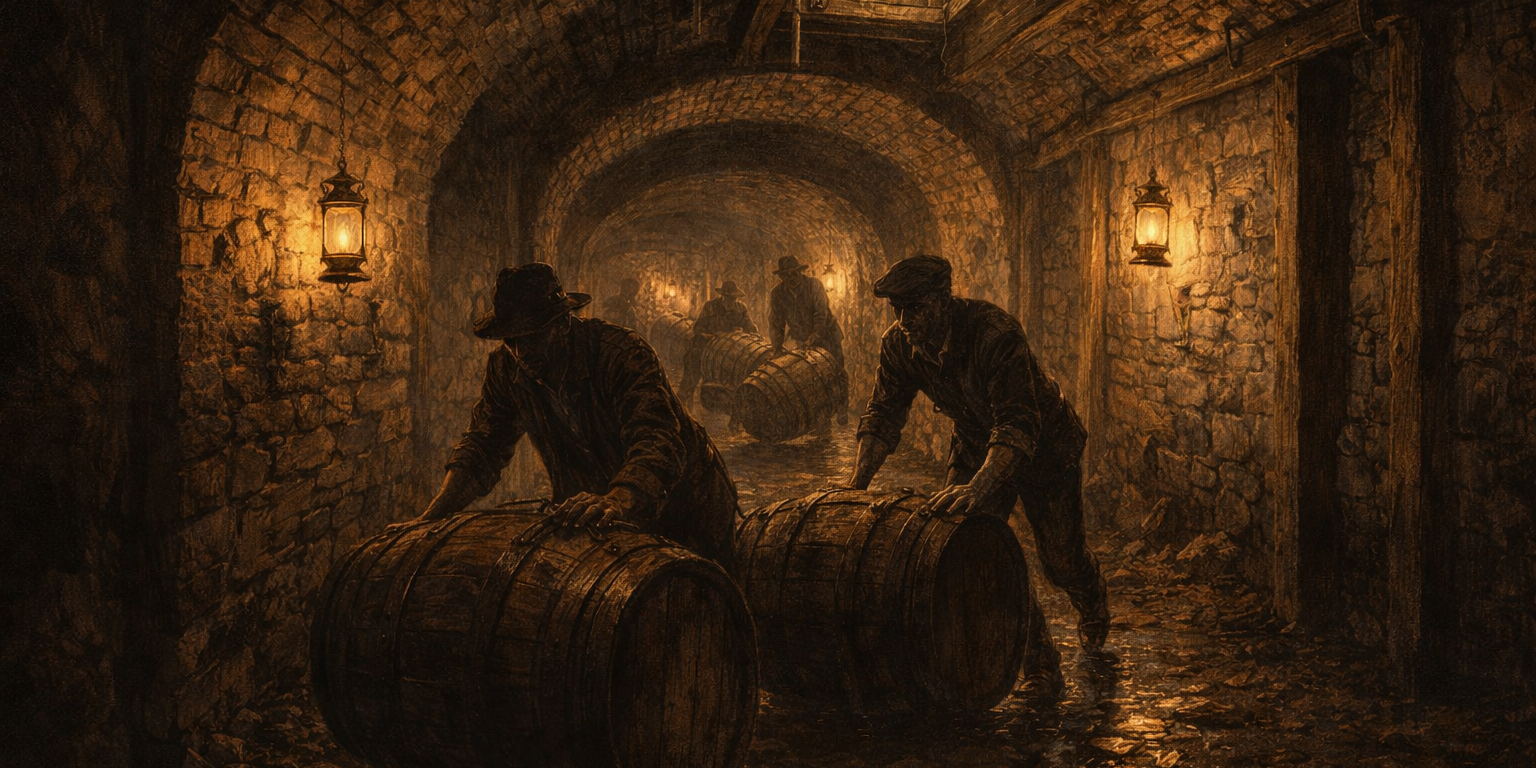
The Strip District’s old warehouses and factories were riddled with sub-basements, steam utility corridors, coal delivery tunnels, and underground connective passages that dated back to the industrial buildout of the neighborhood. During Prohibition, these spaces became the infrastructure of an underground economy in the most literal sense.
If a federal agent came through the front door, a bootlegger could slip down a back stairway into a tunnel connecting to the next building — or all the way to the riverbank. Entire subterranean networks reportedly ran beneath certain blocks of the Strip. Some buildings had trapdoors leading to sub-basements, creating double-layered hiding places for liquor caches.
Federal agents found false floors in delivery trucks, secret wine cellars behind false walls, and liquor caches temporarily lowered into sewer lines. One 1930 report described emerging from a Strip District basement raid into a completely different block after chasing suspects through a warren of connected underground passages. “As if the very ground under Pittsburgh is in league against us,” the report concluded.
There were whispers of a tunnel near 24th Street connecting a riverside dock to an old brewery’s storage cellar — a direct pipeline from boats on the Allegheny to the neighborhood’s distribution network. Proving specific tunnels definitively is difficult. What isn’t difficult is understanding why they existed: the Strip’s bootleggers were operating a serious commercial enterprise and they protected it with serious infrastructure.
Today, an underground bar at 2400 Smallman Street actually offers tunnel tours, guiding guests through sections of a surviving 1920s-era passageway where liquor is believed to have been moved during Prohibition. You can sip a cocktail and stand in the same underground space where someone once frantically hid barrels of whiskey from federal agents.
The Gangs Behind the Bars
Where there’s money, there’s organized crime, and Pittsburgh’s bootlegging operation was enormously profitable.
The early years saw Italian-born gangster Giuseppe “Joe the Boss” Siragusa establish himself as a major supplier of illicit booze in Pittsburgh, building a network that funneled alcohol into neighborhoods across the city including the Strip. His reign ended when he was assassinated with a shotgun blast at his home in 1931, a hit ordered by rivals hungry for his territory.
The power vacuum drew in the Volpe brothers — Louis, Joseph, and John — whose Larimer Avenue Gang aggressively expanded bootlegging and gambling operations citywide. Their growth put them on a collision course with John Bazzano, an ambitious don who had taken over the Pittsburgh underworld in 1929 and wasn’t interested in sharing the Strip’s lucrative rackets with anyone.
For the full story of Bazzano’s rise and what it meant for Pittsburgh’s underworld, John Bazzano: Pittsburgh’s ruthless Mafia don covers it in depth. The short version ends badly for everyone involved.
The Volcano Café Massacre
On July 29, 1932, the Volpe brothers — John, James, and Arthur — made their routine visit to the Volcano Café, a restaurant they owned near the corner of 17th and Smallman Street in the Strip District.
Gunmen walked in and shot all three of them dead in broad daylight while produce vendors worked the street outside.
The hit was ordered by Bazzano. It was one of the most brazen mob killings in Pittsburgh history — three men murdered in the middle of a busy working day in the middle of the city’s most active commercial corridor.
Pittsburgh was stunned. Law enforcement swept through the Strip. Bazzano, however, didn’t last long enough to enjoy his victory. Within weeks, he was found dead in Brooklyn, his body stuffed in a burlap sack — executed by the national Mafia network for ordering hits without approval from above.
The Volcano Café Massacre remains one of the defining moments in Pittsburgh crime history. Notorious Pittsburgh gangsters and the Prohibition era puts the full cast of characters in context, and famous heists and crimes in Pittsburgh history covers the wider landscape of what made this era so violent.
The Law Versus the City
Federal agents didn’t give up on Pittsburgh without a fight.
John Pennington, a former Navy officer turned Prohibition agent, arrived in Pittsburgh around 1930 determined to make a real dent in the illegal liquor trade. He led a series of dramatic raids, busting through trapdoors, hauling out bootleggers, and moving fast enough to alarm the local political machine. The machine fought back. Under pressure from corrupt politicians, Pennington was transferred out of the city before he could finish what he started.
It was a pattern. In a seven-month period in the mid-1920s, 208 stills were destroyed in the Pittsburgh region. Hundreds of speakeasies were raided. Barrels were poured into the streets while onlookers — sometimes the very officers conducting the raid — watched the alcohol drain away.
The next week, new stills replaced the destroyed ones. New speakeasies opened down the block from the padlocked ones. The Strip District remained “wet” until the final day of Prohibition, a sustained act of collective defiance that had its roots in Pittsburgh’s history going all the way back to the Whiskey Rebellion of the 1790s — a tradition of western Pennsylvania telling the federal government what to do with its alcohol taxes.
Repeal and What Came After
On December 5, 1933, Prohibition ended.
In the Strip District, speakeasy operators hung out proper signs and applied for liquor licenses. The tunnels that had ferried whiskey kegs went back to being coal delivery chutes and utility corridors. Many were sealed off. The infrastructure of defiance quietly returned to mundane purpose.
Organized crime didn’t disappear — it adapted. The networks built on bootlegging pivoted to gambling, labor union influence, and other rackets. The Strip continued as Pittsburgh’s food and produce hub, but backroom operations persisted for decades. The Showboat nightclub on Liberty Avenue became notorious through the mid-twentieth century under operator Geno Chiarelli, linked to illegal gambling and underworld figures until the FBI shut it down in the early 1970s. The LaRocca era and the rise of organized crime in Pittsburgh picks up the story from there.
The Strip District Today
The neighborhood that once hid its best operations underground now puts them on display.
Historical walking tours cover former speakeasy sites and bootlegger routes. The Senator John Heinz History Center on Smallman Street features exhibits with old beer barrels, confiscated tommy guns, and photographs from the Prohibition years. And that underground bar at 2400 Smallman, with its tunnel tours and craft cocktails, has essentially turned the Strip’s most notorious chapter into an experience you can book on a Friday night.
If you want to understand how the neighborhood got from there to here, the transformation of the Strip District traces the full arc. And if the Prohibition-era bars themselves are what interest you, Pittsburgh’s oldest bars and the history behind them connects those threads to establishments still standing today.
What It All Means
The Strip District’s bootleg tunnels and speakeasies weren’t just colorful crime history. They were a functioning parallel economy built by a city that refused to accept a law it considered unenforceable, sustained by corruption at every level of local government, and eventually dismantled not by enforcement but by repeal.
The steelworkers and produce vendors and longshoremen who ducked into those basement bars weren’t outlaws in their own minds. They were doing what Pittsburgh has always done — finding a way to get the job done regardless of what the official framework says about it.
Next time you walk down Smallman Street, look down.
The ground under the Strip has kept its secrets for nearly a century. Some of them are still down there.
The Strip District’s Prohibition-era speakeasy and bootlegging operations ran from 1920 to 1933. The Volcano Café Massacre occurred on July 29, 1932, at 17th and Smallman Street. The Senator John Heinz History Center at 1212 Smallman Street features exhibits covering Pittsburgh’s bootlegging era.